
Quarter 3 Economic Update
Hey PEG Members!
Welcome to the 2026 Q3 Equipment Economic Outlook from PEG, covering the close of Q3 and what to watch heading into Q4. Our sources this quarter at Dodge Construction, the American Rental Association (ARA), ITR Economics, federal economic data, and our own data paint a more mixed picture than they did in the spring. Non-residential and non-building construction are still growing at a strong clip, but the war in Iran has pushed diesel to record highs, inflation has stayed sticky, and the Federal Reserve raised interest rates in September for the first time since 2023.
Before we dive into the economy at large, a quick update on our own numbers:
Through our collection of ROC information, we have found that the PEG median 12/12 growth rate for Equipment Operators through August 2026 is 6.5% amongst 36 operations. The PEG average was 15.32% compared to 17% in March 2026, so overall, the network is slowing down in its (still positive) growth. As always, this is purely top-line rental revenue, so do beware that younger businesses and businesses going through acquisitions can skew these numbers.
And if you haven’t yet had a chance to dig into the 2025 Year-End Composite Book for Equipment, feel free to reach out to Dan (dcrowley@peerexecutivegroups.com) or Charlie (cpetersen@peerexecutivegroups.com)!
The Rental Industry: Growth continues, but it’s concentrated
ARA’s latest quarterly forecast, released in August, projects that U.S. construction, industrial, and general tool rental revenue will grow 3.4% in 2026, slightly below the 3.6% it projected last quarter. The good news is that growth is expected to pick up to 4.4% in 2027 and 5.1% in 2028, both a bit higher than prior projections. ARA notes that the long-term shift toward renting over owning continues, but that results are mixed: operators near large infrastructure projects or data center buildouts are seeing the strongest numbers.
The public companies are telling the same story. United Rentals posted record Q2 results with rental revenue up 12.7% year-over-year and fleet productivity up 3.4% and raised its full-year guidance. However, management described the local market environment as relatively flat, with growth coming from large projects, power, and specialty. For most of our members, the takeaway is that the megaproject economy and the local contractor economy are moving at different speeds right now. Keep that in mind when benchmarking your own growth against the PEG average above.
The Macroeconomy: Slower growth, sticky inflation, and higher rates
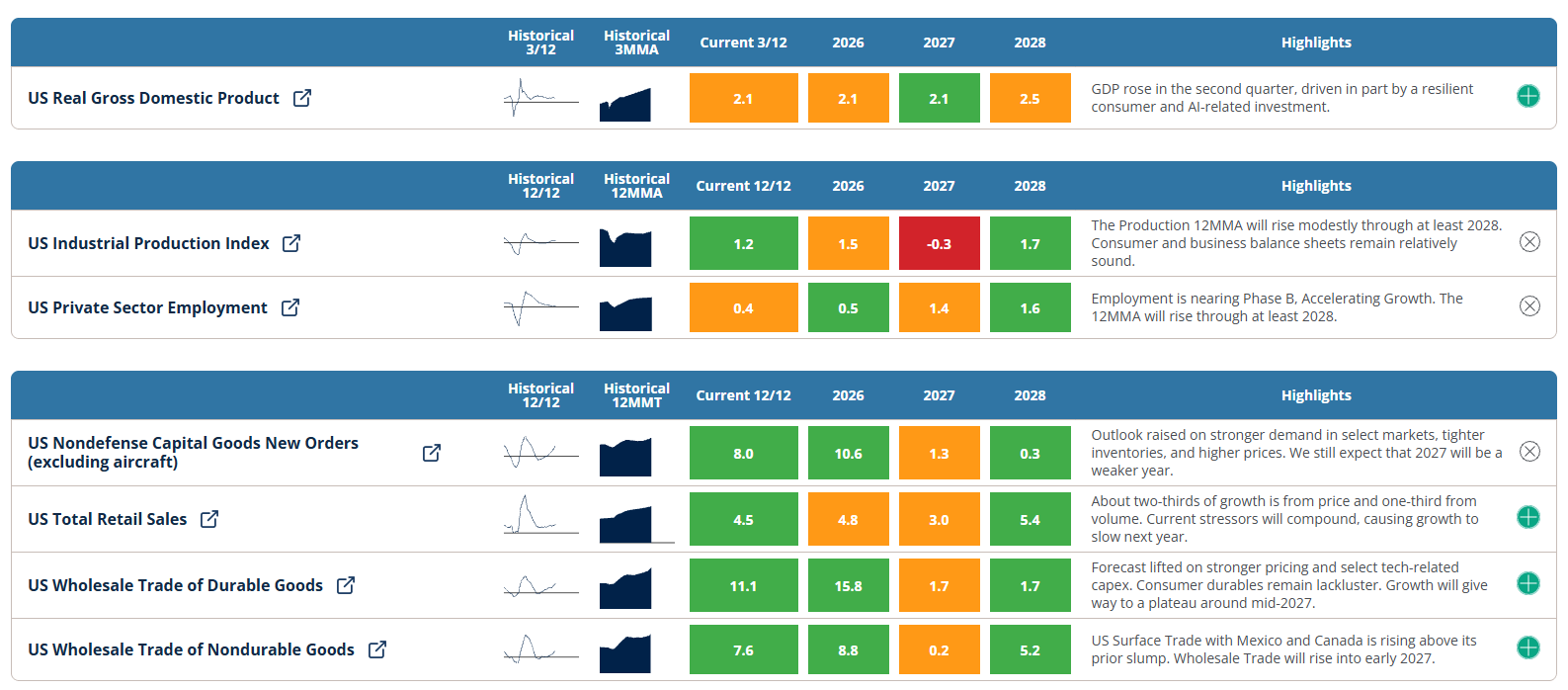
- ITR, The Core US Economy at-a-Glance, September 2026
Real GDP grew at a 2.1% annualized rate in Q2 flat with 2.1% in Q1 and below what economists expected. The bright spot for our industry is that construction machinery new orders remained robust at 23.4% year-over-year growth, while investment in structures contracted for the tenth straight quarter.
Inflation is the bigger story. Consumer prices rose 3.4% year-over-year in August, unchanged from July, with crude oil up 29.4% over the past year. Core inflation (excluding food and energy) was a much tamer 2.4%, which tells us energy is doing most of the damage.
In response, the Fed voted 12–0 on September 16 to raise its benchmark rate by a quarter point to 3.75%–4.00%, its first hike since 2023. The median Fed official now expects one more increase before the end of 2026, and the next meeting is October 27–28. For rental operators, this means floor plans, fleet financing, and lines of credit are getting more expensive, not less, so plan Q4 and early 2027 fleet purchases with higher borrowing costs in mind.
Construction: Non-residential and non-building still lead the way
Dodge Construction reported that total construction starts fell 24.8% in August to a seasonally adjusted annual rate of $1.34 trillion. Don’t let that headline scare you, as it was largely a return to normal after a July surge in megaproject starts. On a 12/12 basis, total construction starts are up 14.5%:
- Non-building construction 12/12 of 27.6% (utility/gas starts up 87.8%)
- Non-residential construction 12/12 of 17.9% (commercial starts up 48.6%)
- Residential construction 12/12 of -2.4%
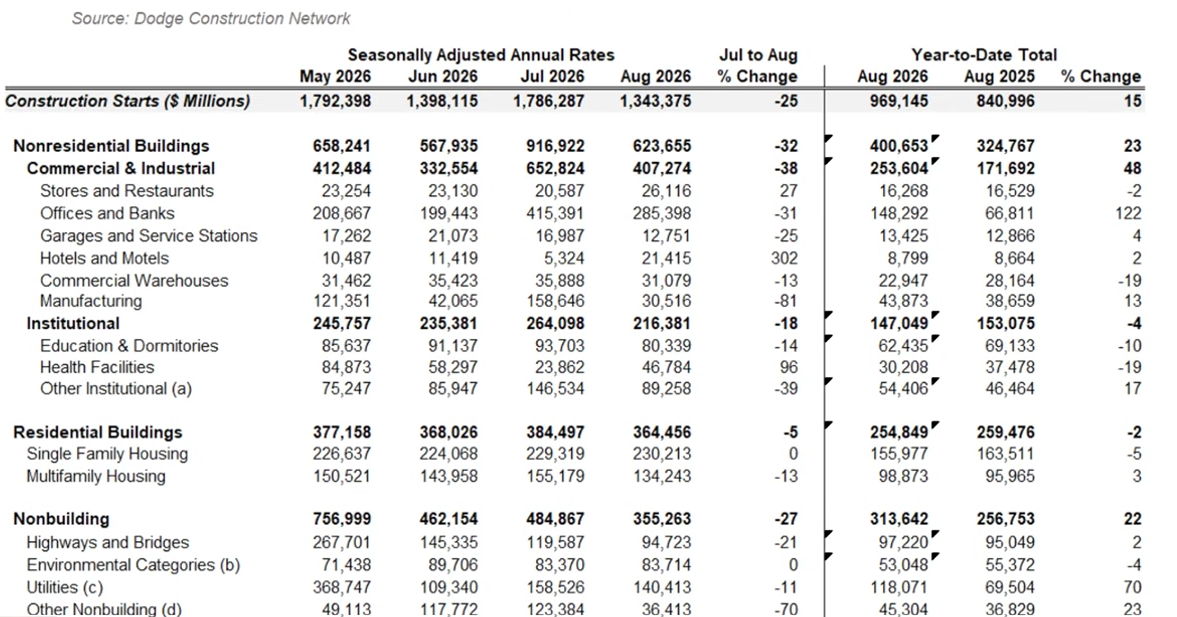
*Note: the % change on the right side is based off of Year-to-Date numbers
- Dodge Construction, Construction Starts Fall Back 24.8% in August
Dodge’s economic research team summed it up well: setting aside month-to-month swings, data center, semiconductor, and energy construction are driving growth, while many other sectors are seeing subdued activity alongside worsening labor shortages and rising material prices.
Residential continues to be the sore spot. Single-family starts are down 8.6% on a 12/12 basis and were essentially flat in August (+0.4% month/month), while multi-family is up 8.7% on a 12/12 basis but fell 13.5% in August.
Moving to non-residential, commercial and industrial starts are up 47.7% year-to-date, while institutional starts are down 3.9% year-to-date. August was a noisy month: hotels more than tripled, retail rose 26.9%, and healthcare jumped 96.1% after a weak July, while offices and data centers (-31.3% m/m), parking garages (-24.9% m/m), warehouses (-13.4% m/m), and education (-14.3% m/m) all pulled back. Manufacturing fell 80.8% after July’s megaproject starts.
Non-building remains the strongest segment, led by electric power and utilities (up 69.9% year-to-date). However, highways and bridges fell 20.8% in August and are up just 2.3% year-to-date, and environmental public works are down 4.2% year-to-date. Those were some of last quarter’s hottest categories, so keep an eye on them if public work is a big part of your book.
Regionally, total construction starts in August fell everywhere except the South Central (+28.8% month/month). The Northeast (-52.6% m/m), the West (-51.4% m/m), the South Atlantic (-24.2% m/m), and the Midwest (-1.1% m/m) all saw declines, though much of that is the July megaproject hangover.
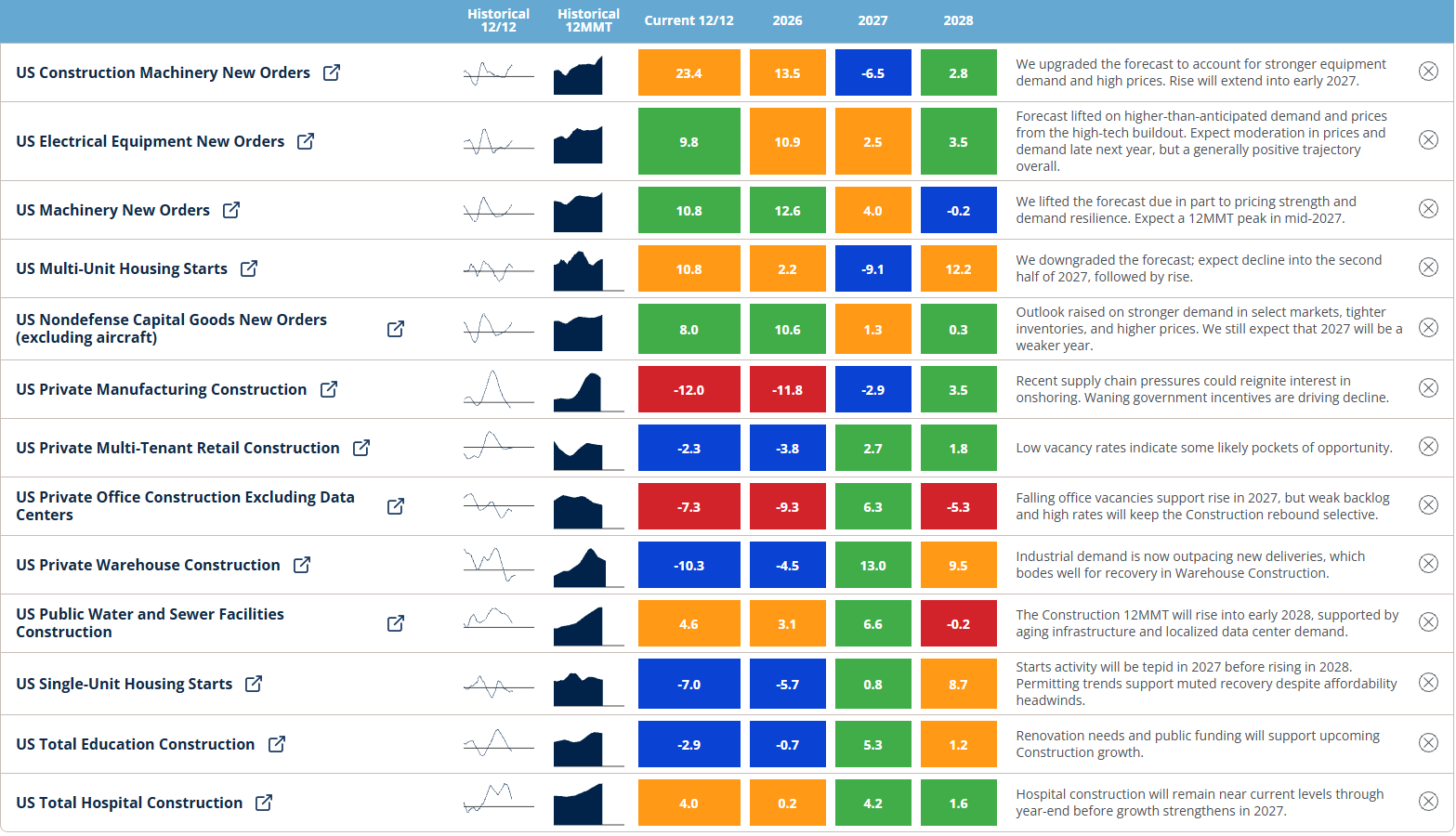
- ITR, Construction Economy at-a-Glance, September 2026
Looking Further Out: Planning is broadening beyond data centers
The Dodge Momentum Index, which tracks non-residential projects entering planning and leads construction spending by 12 to 18 months, dipped 0.4% in August but remains up 4.2% from a year ago. Data center planning cooled, while offices, parking garages, hotels, education, recreational, and public buildings all picked up steam.
This is a healthy sign. The data center boom won’t carry the industry forever, and a broader planning pipeline means more work for local and regional contractors in 2027 and 2028, which is exactly the customer base most of our members serve.
Supply: The used equipment market is softening
Last quarter, we noted that strong demand made it a great time to sell used equipment. That window is starting to narrow. According to Sandhills Global’s August data, used heavy construction equipment inventory is down 10.45% year-over-year, but asking values are down 1.55% and auction values are roughly flat year-over-year, with both trending down. Aerial is where the softening is most visible: auction values for used aerial lifts fell 6.36% year-over-year, and asking values for telescopic booms are down 7.26%. Dealers are reporting slower sales and more cautious buyers, even as rental demand remains strong.
For rental operators, a few implications. If you have disposals planned, don’t sit on them, especially aerial and telehandlers. Tight inventory should keep supporting heavy earthmoving values for now. And if you are buying, this may be a better market for used aerial units than we have seen in a while, though higher borrowing costs will eat into some of that benefit. For a benchmark on what’s achievable, United Rentals recovered about 53% of original cost on fleet it sold in Q2.
Labor Market: Stable overall, but construction labor is still tight
The August jobs report came in much stronger than expected, with 162,000 jobs added against a forecast of about 53,000. Unemployment held at 4.1%, construction added roughly 22,000 jobs, and average hourly earnings are up 3.1% over the past year. Layoffs remain low, with the 2026 layoff pace the slowest in four years.
That said, Dodge is flagging deeper labor shortages in construction, and our members continue to tell us that technicians and CDL drivers are the hardest seats to fill. Budget for continued wage growth in the 3% range for 2027, and more for skilled roles.
Fuel: The biggest headwind heading into Q4
We have all felt this one. The national average diesel price hit a record $6.53 per gallon as of September 22, up $2.78 from a year ago, with the Midwest at $6.68 and the West Coast at $7.46. The EIA expects diesel margins to stay elevated through November before easing through mid-2027, assuming tanker traffic through the Strait of Hormuz returns to normal. Low distillate inventories, fall refinery maintenance, and harvest-season demand are all adding pressure this fall. There are differing expectations on when pricing will cool down, with the EIA forecasts averaging around $90 per barrel for the rest of 2026 and ITR forecasting barrel pricing to dip down before the end of 2026. Both forecast a lighter 2027, but the timeline of the war will truly determine when pricing returns to “normal.”
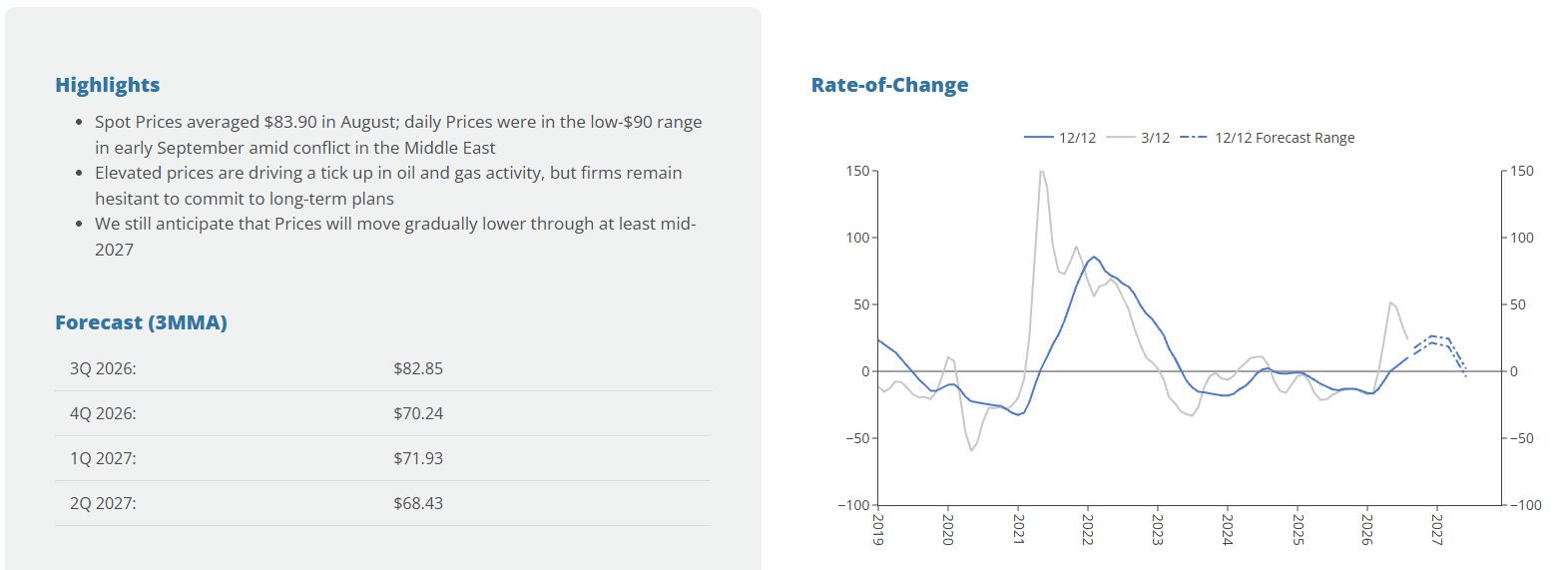
- ITR, US Crude Oil Spot Prices, September 2026
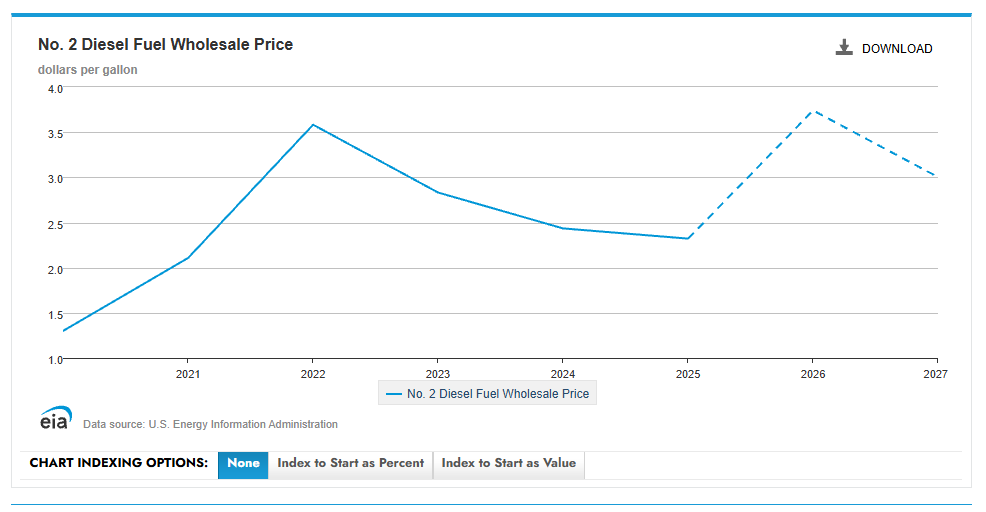
- U.S. Energy Information Administration, Diesel Fuel Wholesale Price as of Sept. 2026
If you haven’t revisited your fuel surcharges, refueling charges, and delivery and pickup rates since spring, now is the time.
The Quarter Ahead:
The economy is still growing, but more slowly, and costs are rising faster than they were in the spring. Expect continued strength in markets tied to power and utilities, data centers (even with planning cooling), commercial construction, multi-unit, and institutional work coming out of the planning pipeline. Be more cautious in markets tied to single-family housing, warehouses, and near-term highway work.
Heading into Q4, a few things to consider:
- Rates and surcharges: Review rate cards and fuel surcharges before winter, and make sure delivery pricing reflects $6+ diesel.
- Capital spending: Make Q4 fleet purchase decisions with rising borrowing costs in mind. The Fed meets again October 27–28, and another hike is on the table.
- Fleet disposals: Move planned disposals sooner rather than later, particularly aerial and telehandlers.
- Overhead: As ITR cautioned last quarter, be careful about adding overhead tied to the megaproject boom.
- 2027 positioning: With ARA expecting rental growth to accelerate to 4.4% next year, use the slower season to plan fleet mix and staffing for the upturn.
Hope everyone has a great fall and a strong finish to the year, and as always, feel free to reach out with any questions, my email is ncrowley@peerexecutivegroups.com.
Thanks,
Noah
*This article was written with the assistance of AI.